
A ductless installation with several rooms can be built two ways, and they behave differently.
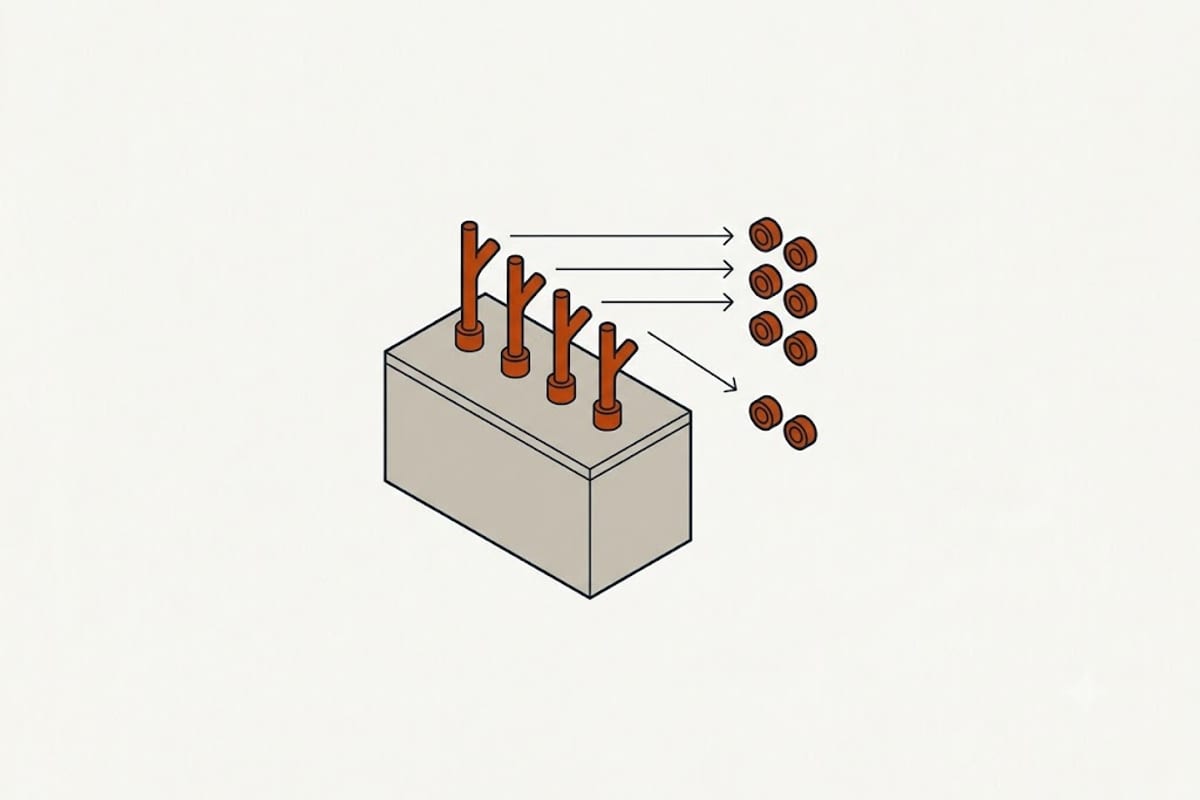
Multi-zone
One outdoor unit, several indoor heads, refrigerant lines from each head back to the condenser.
Advantages. One outdoor unit, so one wall location, one electrical circuit, one set of clearances, and a tidier exterior. Usually cheaper than the equivalent number of separate systems.
The limitation. The compressor serves all the heads together. When only one small room is calling, the outdoor unit must turn down far enough to serve just that head.
Single-zone
One outdoor unit per indoor head.
Advantages. Each system modulates independently across its full range, which is much better at part load. A failure affects one room rather than all of them. Efficiency ratings for single-zone equipment are generally higher.
The cost. More outdoor units, more wall space, more electrical circuits, more to look at.
The part-load problem in detail
A multi-zone condenser has a minimum output. If it is sized for four heads totalling 42,000 BTU, its turndown floor may still exceed what one 9,000 BTU bedroom needs on a mild evening.
The system then short cycles, or the head runs warmer than it should, and the room does not dehumidify. This is the most common source of disappointment with multi-zone systems, and it is a design consequence rather than a fault.
It is worst where the heads are very different sizes, or where most rooms are unused most of the time.
Oversizing by addition
A related trap: sizing the outdoor unit as the sum of the head capacities.
Rooms rarely peak simultaneously — the west bedroom peaks in the evening, the east one in the morning. Manufacturers publish a connection ratio allowing total head capacity above the condenser rating, commonly up to 130% or more.
Sizing to the simple sum produces an outdoor unit far larger than the house ever needs at once, with the turndown problem that follows.
When multi-zone is the right answer
Limited wall or ground space for outdoor units.
Rooms of similar size with similar usage patterns.
A whole-house installation where several rooms are conditioned together most of the time.
Where appearance matters and several condensers on a visible elevation is unacceptable.
When separate systems are better
A house where one room is used very differently — a home office conditioned all day, bedrooms only at night.
Rooms of very different sizes, where the turndown range cannot cover both.
Where efficiency ratings matter for a rebate threshold, since single-zone equipment generally rates higher.
Where redundancy matters, since a single condenser failure leaves the whole house without conditioning.
The mixed approach
Nothing prevents a mixture: a multi-zone unit for three similar bedrooms, and a separate single-zone system for the large open-plan living space that has a very different load and schedule.
This is frequently the best answer and it is rarely proposed unless asked for.
What to ask a contractor
The proposed condenser's minimum output, and what happens when only the smallest head is calling.
The connection ratio used, and the total head capacity against the condenser rating.
Whether the load was calculated per room, and whether the peaks were assumed to be simultaneous.
Those three questions separate a designed installation from a catalogue selection.
Line set limits
Every system has a maximum total refrigerant line length and a maximum height difference between the indoor and outdoor units, and multi-zone systems have limits per branch as well.
A long run to a distant room loses capacity, and exceeding the published limits voids the rating and sometimes the warranty. On a large house this is a real constraint on where the outdoor unit can go, and it is worth raising before the location is chosen for appearance.
Branch boxes
Some manufacturers use a branch box — a distribution unit indoors from which each head is run — rather than separate line sets all the way to the condenser.
It simplifies the pipework and adds a component that needs access for service. Where one is proposed, ask where it will be mounted and whether it will still be reachable after the ceiling is closed up.