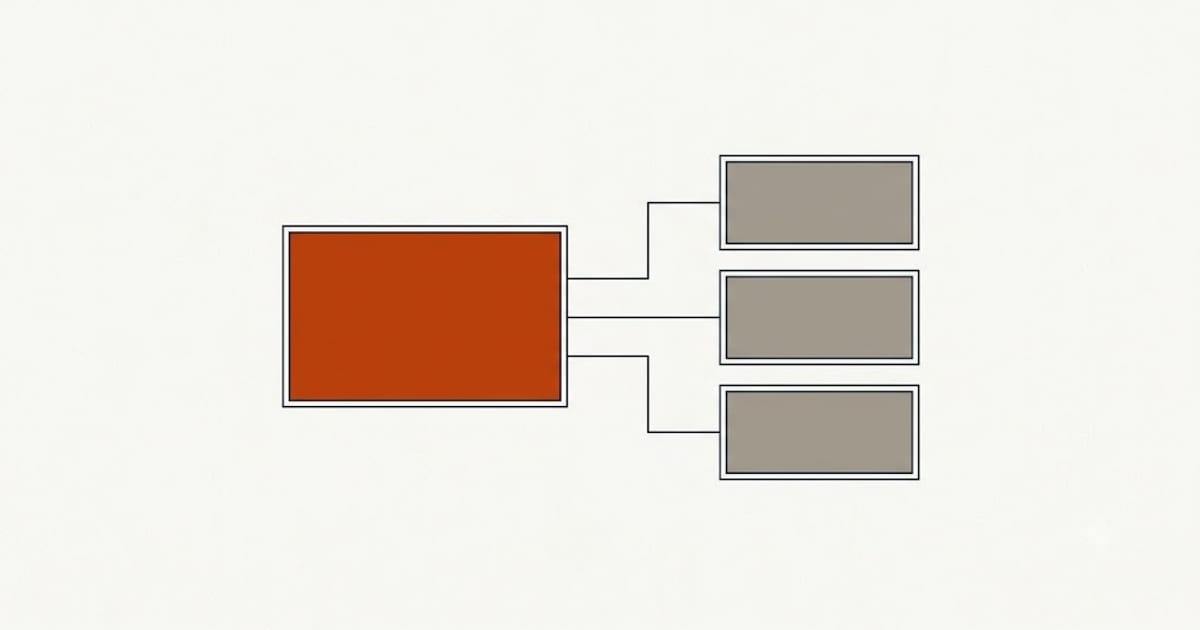
A multi-zone system that cools three rooms well and one room poorly is rarely short of capacity. The usual cause is the opposite, and it is specific to how multi-zone equipment works.
The floor the compressor cannot go below
An inverter compressor modulates, but not to zero. It has a minimum output — commonly 25 to 40% of its rated capacity — and it cannot run below that while producing anything.
Now consider a 36,000 BTU condenser with a minimum of about 12,000 BTU, serving four heads. At 2am one 9,000 BTU bedroom head calls for cooling. The bedroom wants perhaps 4,000 BTU. The compressor cannot go below 12,000.
What happens next depends on the manufacturer: some run the other heads slightly whether you asked or not; some cycle the compressor on and off, which is exactly the short cycling inverters were meant to avoid; some simply overshoot and the bedroom gets cold and clammy.
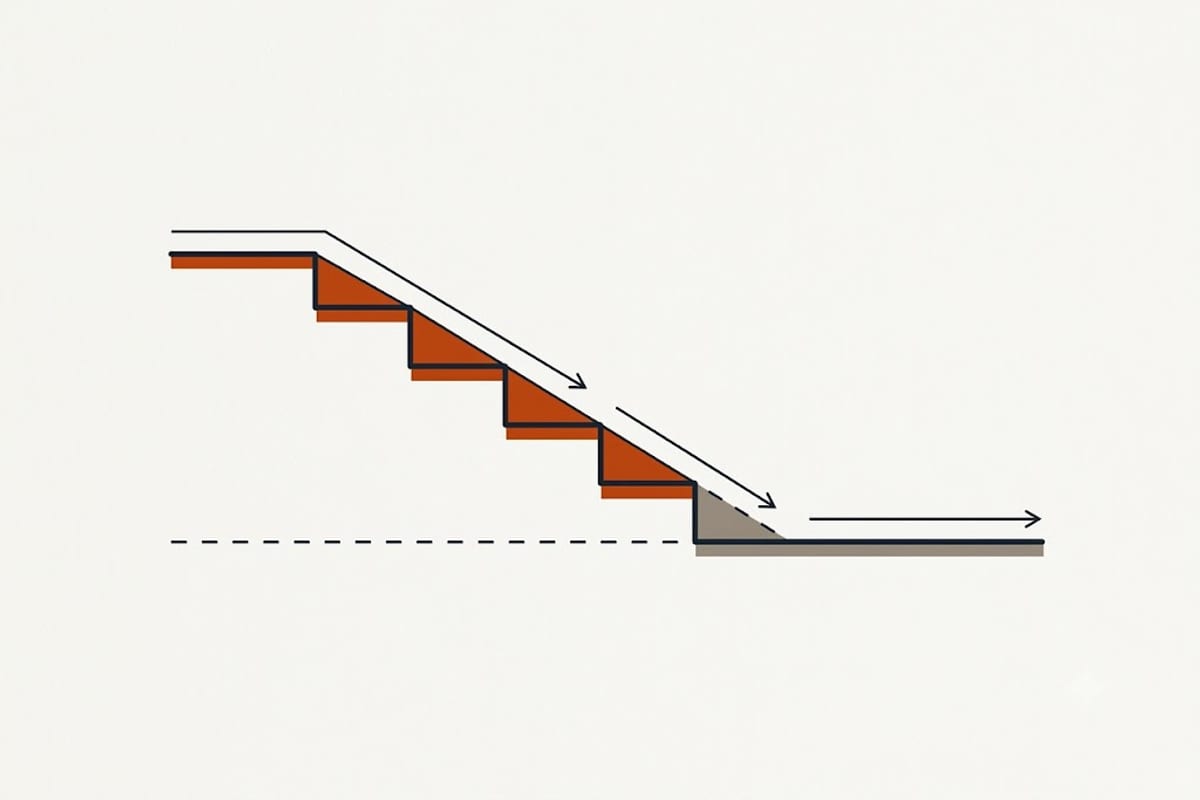
Why the problem shows up in the smallest room
The mismatch is worst when the calling load is smallest relative to the condenser. That means:
- the smallest head,
- at night,
- in mild weather,
- when nothing else is calling.
Which is precisely the bedroom-at-2am case that generates the complaint.
Total head capacity is usually more than the condenser
This surprises people reading the spec sheet. A 36,000 BTU condenser is routinely sold with four 12,000 BTU heads — 48,000 BTU of heads on a 36,000 BTU outdoor unit.
That is intentional and normally fine, because all four rooms never peak together. It is called diversity, and it is why the system works. But it does mean that if every room genuinely does call at once on the hottest afternoon, the condenser cannot serve them all at full output, and the rooms furthest from setpoint lose.
Check the ratio: total head capacity should generally not exceed about 130% of the condenser rating. Well beyond that and the design was optimistic.
The other causes, quickly
A head that is oversized for its room. Same problem one level down: the head cannot modulate below its own minimum either. A 12,000 BTU head in a 200 ft² bedroom that needs 4,000 will never run properly.
Line set length differences. Heads far from the condenser lose capacity to line losses. Manufacturers publish maximum lengths and a maximum height difference between the highest and lowest head — exceed those and the far rooms underperform in a way no setting fixes.
Refrigerant charge. Multi-zone systems need charge adjusted for total line length, and this is frequently skipped. Undercharged systems underperform everywhere, but the far heads show it first.
A head in the wrong place. High on an interior wall with a clear path across the room. Above a door, behind a wardrobe, or blowing into a wall six feet away, and the room mixes badly regardless of capacity.
How to tell them apart
| Symptom | Likely cause |
|---|---|
| Only bad at night or in mild weather, one small room | Minimum output floor |
| Bad only when every room calls at once, hot days | Condenser undersized against total load |
| One specific room always bad, others fine, room is far from condenser | Line length or charge |
| Room reads correct temperature but feels clammy | Head oversized for that room |
What to do about the floor problem
There is no setting that lowers a compressor's minimum. The practical options:
Let the small room share. Leaving the door open couples it to a larger space, which raises the calling load above the floor.
Use a schedule rather than a setpoint. Cooling the bedroom during the evening, while other zones are also calling, and coasting overnight, avoids the isolated small call entirely.
At design time, prefer two single-zone systems over one two-zone. For two rooms this is frequently cheaper anyway, each compressor matches its own room, and a failure takes out one room instead of the house. The tidiness of a single outdoor unit is the only thing lost.