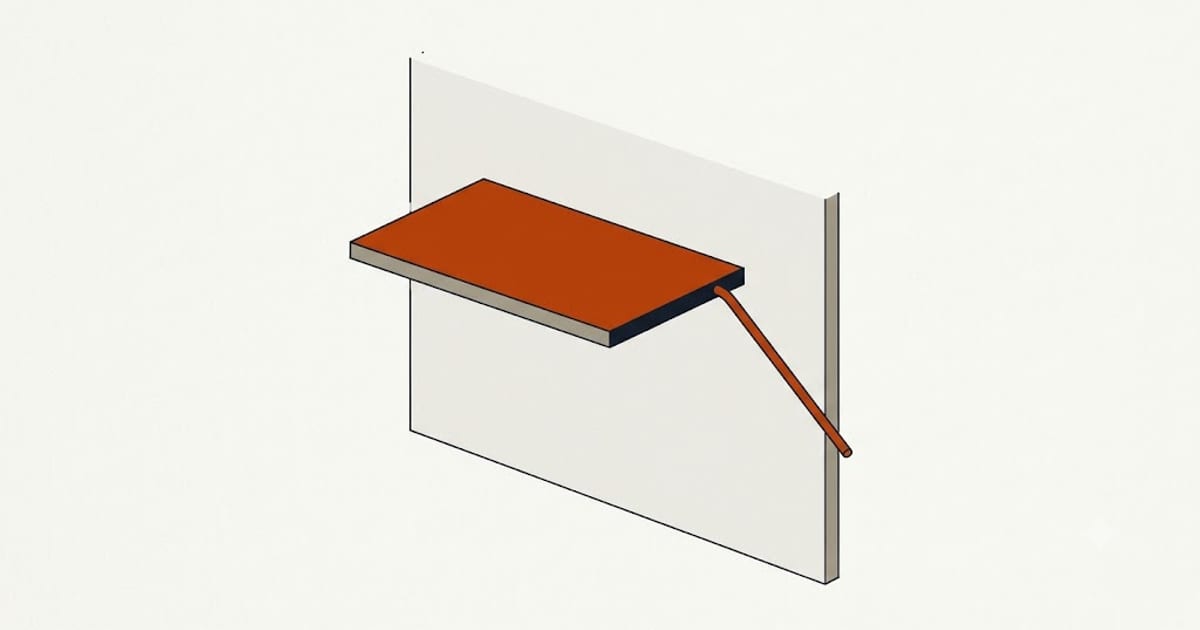
An indoor head in cooling mode condenses moisture out of the air — one to three litres a day in humid weather is entirely ordinary. That water collects in a tray under the coil and leaves through a small drain line, usually by gravity alone.
Water appearing on the wall means that path has failed. There are four ways it does.
1. The drain line is blocked
By far the most common. The line is narrow, permanently damp, and dark — ideal for biological slime, which builds until the pipe closes.
The tray then overflows at its lowest edge, which is the front of the head, so water runs down the wall.
The fix is to clear the line. A wet/dry vacuum at the outdoor end pulls the blockage out in seconds and is the standard method. Prevention is a cup of diluted vinegar down the line a couple of times a season.
2. The line has no fall, or a sag in it
The drain works on gravity, so it needs continuous downward slope from the head to the outside — a minimum of about ¼ inch per foot, and more is better.
Two failures here:
No fall at all. An installer who ran the line level, or slightly uphill to reach a convenient exterior hole, has built a leak that appears the first humid week.
A sag between supports. The line is soft plastic, usually bundled inside the line-set wrap. Unsupported over a long run it dips, water sits in the dip, slime grows preferentially in the standing water, and the dip becomes a block.
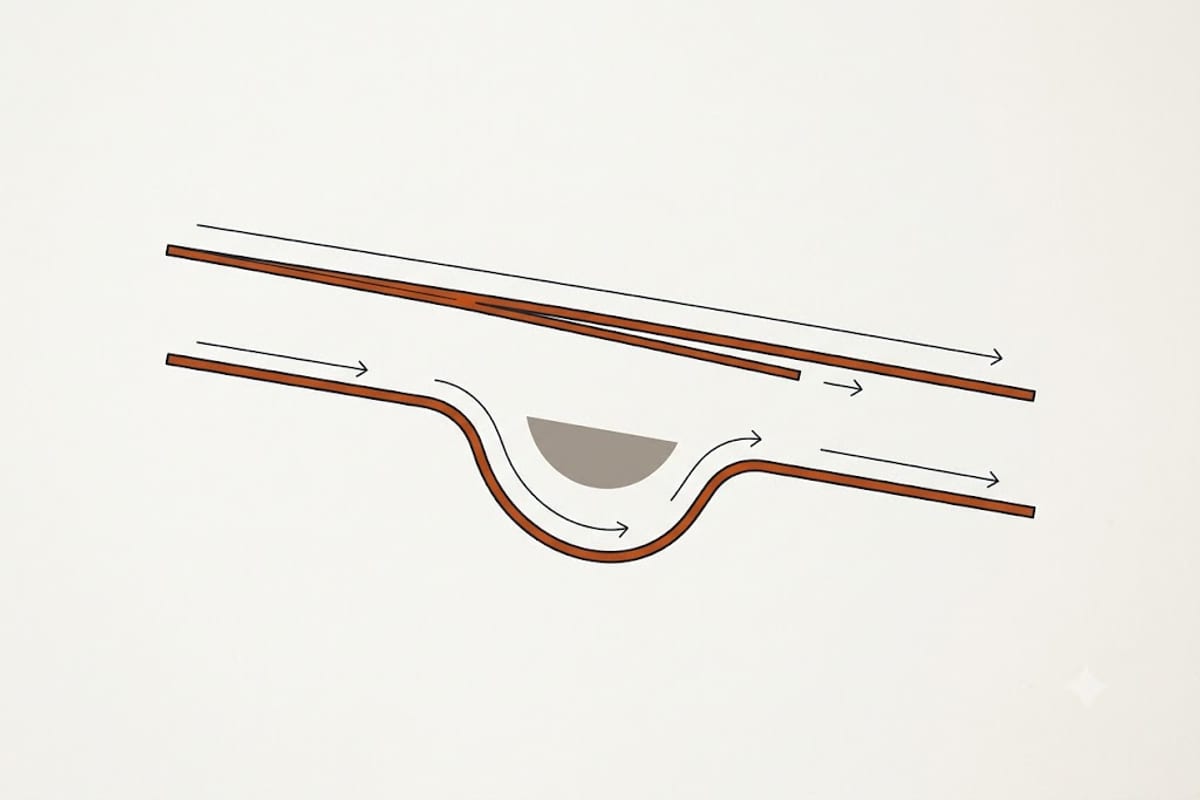
This is a re-run of the line, not a cleaning. It is worth confirming before paying for repeated clear-outs.
3. The head is not level, or is level the wrong way
Wall heads are designed to sit very slightly tilted toward the drain side so the tray empties. Mounted dead level, or tilted the wrong way, the tray holds water and overflows the opposite end.
The tell is water on the side of the head away from the drain outlet. Correcting it means loosening the mounting plate and re-hanging — a short job that is often blamed on the drain for months first.
4. Ice on the coil, then melting
If the head has been running with restricted airflow or low refrigerant, the coil ices up. Ice is bigger than the tray, so when it melts the water sheds outside the tray entirely and runs down the wall.
The distinguishing sign is that the leak is intermittent and large rather than steady and small, and the head has been cooling poorly.
Causes: a filthy filter, blocked return path, a fan not running, or a refrigerant leak. The water is the symptom; the coil is the problem.
Where a pump is genuinely needed
Gravity requires the outdoor end to be lower than the head. Where that is impossible — a basement installation, or a head on an interior wall with no downhill route — a condensate pump is the correct answer.
Pumps are reliable but they are a mechanical component with a float and a reservoir, and they fail. If a pump is in the system, fit it with a safety switch wired to cut the head when the reservoir fills. Without that, a failed pump quietly floods until somebody notices the ceiling.
Two things to check before calling anyone
Is the filter clean? Lift the front cover, pull the mesh screens, rinse them. Restricted airflow causes cause four, and this takes two minutes.
Where does the drain exit outside? Find the end of the line on the exterior wall. If nothing is dripping while the head runs on a humid day, the line is blocked and that is your answer before anybody opens anything.