In cooling, a ductless head condenses moisture out of the room air. That water collects in a pan under the coil and leaves through a drain line that runs with the refrigerant lines to the outside.
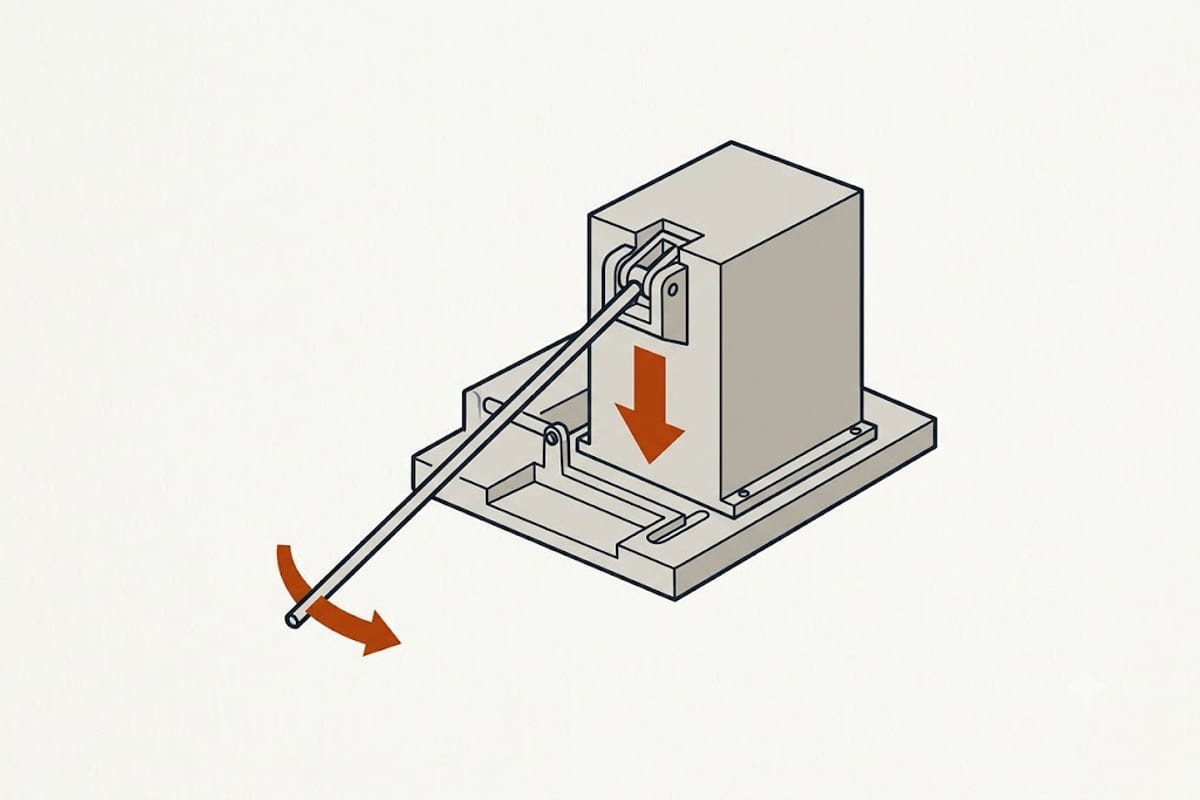
Gravity is the default
The line must fall continuously from the head to its discharge point. Any rise, any sag, any dip holds water.
A sag also collects debris and biological growth, which eventually blocks it. That is the most common cause of a head dripping inside a room, and it is a drainage fault rather than an equipment fault.
The fall required is modest — a consistent slope is what matters, not a steep one — and it is decided by where the head is mounted relative to where the water can go.
Why head placement and drainage are the same decision
A head high on an exterior wall with the outdoor unit below it drains by gravity through the same penetration as the refrigerant lines. Simple and reliable.
A head on an interior wall, or on a wall where the line must run upward to reach a route, cannot drain by gravity.
That is the point at which a pump enters the design, and it is a consequence of where the head was placed.
Condensate pumps
A small pump with a reservoir, a float switch and a discharge tube, mounted at the head or nearby.
They work. They also introduce a component that fails, that makes a noise in a quiet room, and that needs access for service.
Where one is used, it should be wired so that a failure or a high-level condition shuts the head down rather than letting the reservoir overflow. That safety interlock is available on most pumps and is sometimes not connected.
Where the water discharges
Outside, which is the usual arrangement and the simplest.
Two things to check: that it does not discharge onto a path where it will ice, and that it does not discharge against the foundation.
Into a drain, where local rules permit. Straightforward, and it needs a trap or an air gap so sewer gas does not travel back up the line.
The blockage
The line collects dust from the room and, in humid conditions, biological growth. Over a few seasons it narrows and then blocks.
Symptoms: water at the bottom of the head, a drip down the wall, or on some units an error code from a float switch in the pan.
Prevention: flushing the line annually, which a service visit should include and frequently does not unless asked.
Clearing it: a wet vacuum applied at the outdoor end usually pulls the blockage out. Compressed air blown from inside pushes it further in and sometimes blows water into the room.
Insulation on the line
In an unconditioned space the drain line carries cold water and will sweat, which produces condensation on the outside of the line and drips inside a wall or a ceiling.
Where a line runs through an attic, crawl or wall cavity, it needs insulating for the same reason the refrigerant lines do.
In heating
Ductless heads do not produce condensate in heating mode. The outdoor unit does, during defrost.
That water runs off the outdoor coil and needs somewhere to go, which is why the unit is raised and why a drain pan heater is worth having in a cold damp climate. A unit sitting in a growing block of its own ice is a drainage problem at the other end of the system.
What to confirm at installation
That every head drains by gravity where it can, that any pump has its safety interlock wired, that the discharge point is sensible, and that the line is insulated where it passes through unconditioned space.
Four items, none expensive, and between them they account for most of the water-related service calls on ductless systems.